Understanding the Nitrogen Cycle in Freshwater Aquariums
Ammonia, nitrite, and nitrate explained in plain language, what “cycling” means, how to read your tests, and how to know when a tank is ready for fish.
This article is an explainer, not a species care sheet: it covers the chemistry and biology every new aquarist hits before fish care (feeding, compatibility, disease) really starts. Once you understand the cycle, maintenance and stocking decisions make sense.
Quick check: In a mature, stocked tank, ammonia and nitrite should read 0. If they don’t, something is wrong, don’t add more fish until you find the cause (overfeeding, dead livestock, crashed biofilter, etc.).
So what is the nitrogen cycle?
Fish waste, uneaten food, and decaying organic matter release ammonia. In an established aquarium, beneficial bacteria convert that ammonia in two steps:
- Ammonia → nitrite (NO₂⁻) , still dangerous to fish.
- Nitrite → nitrate (NO₃⁻) , much less toxic at typical hobby levels; you control it with water changes and (in planted tanks) plant uptake.
Cycling means growing enough of those bacteria on filter media and surfaces so ammonia and nitrite stay at zero under normal bioload. Until that happens, adding a full stock of fish is risky.
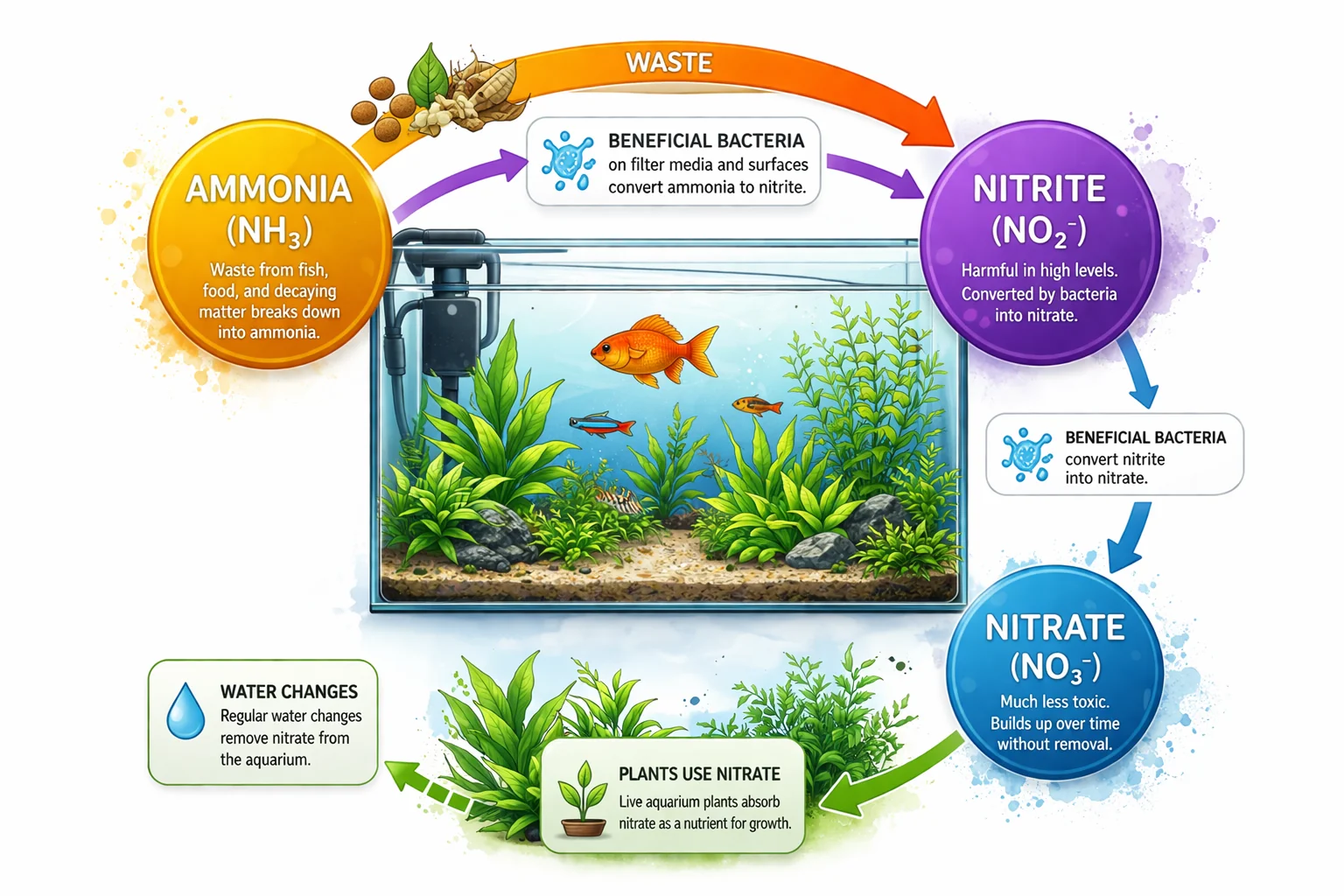
Same flow as above: once you’ve read the labels, the rest of the guide fills in the “how long” and “how to test” detail.
Reading ammonia, nitrite, and nitrate
| Test | Role in the cycle | What you usually want in a cycled tank |
|---|---|---|
| Ammonia | Raw waste; first thing to spike in a new tank | 0 |
| Nitrite | Intermediate; spikes mid-cycle | 0 |
| Nitrate | End product; rises unless removed | Often 5–40 ppm when stocked (lower is simpler for beginners) |
Follow your kit’s instructions; drop (liquid) tests are generally easier to interpret than strips for fine differences.
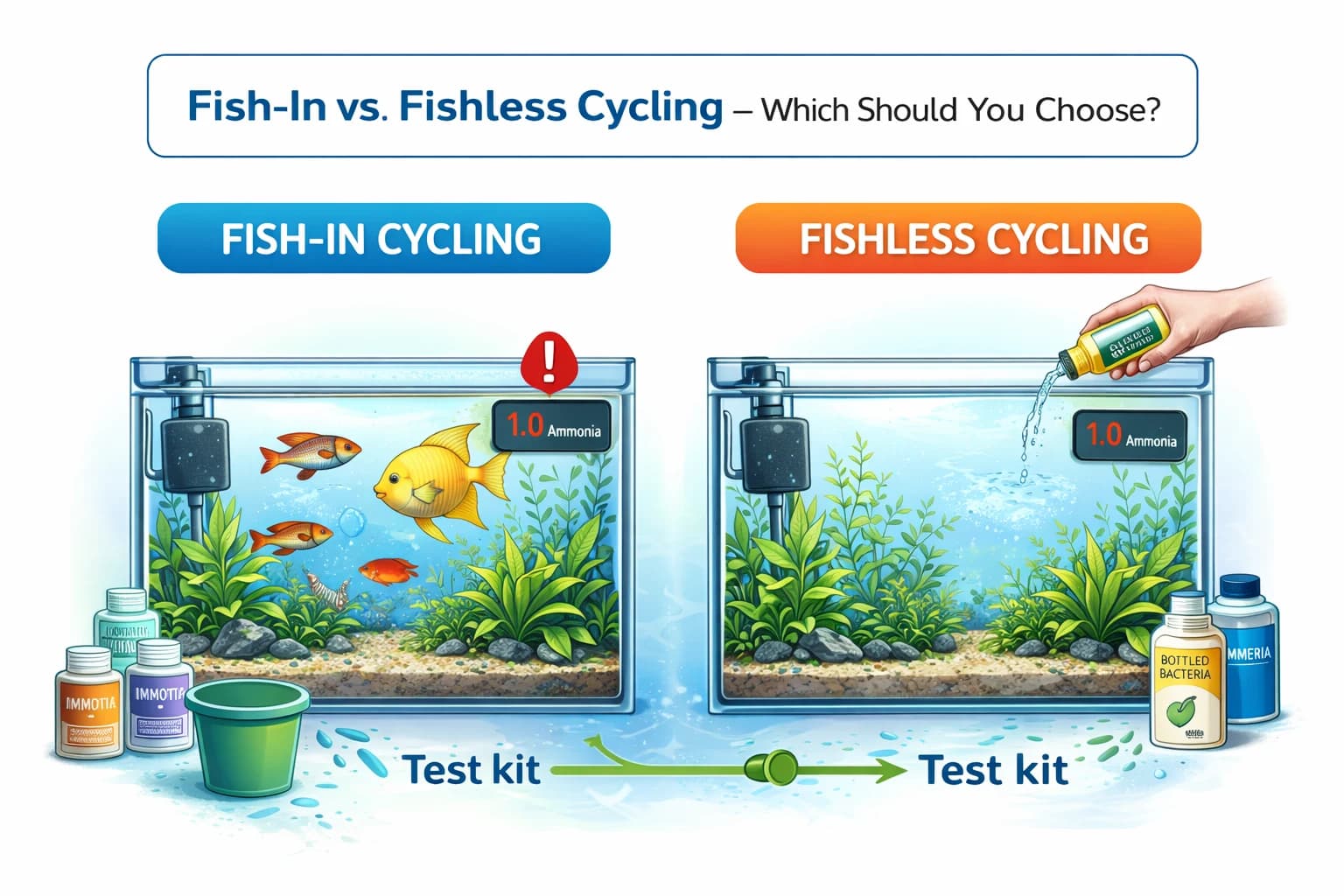
Fishless cycling vs fish-in cycling
For a full comparison (pros, risks, and how to choose), see the dedicated guide: Fish-In vs Fishless Cycling.
Fishless cycling
You run the tank with an ammonia source (or controlled decay) and no fish until parameters stabilize. Fish aren’t exposed to early spikes, this is what many experienced keepers recommend for first tanks.
Fish-in cycling
Fish are present while the cycle develops. It can work only with very light stocking, daily or frequent testing, and water changes whenever ammonia or nitrite climb, but it stresses livestock. If you’re new, fishless cycling (sometimes paired with bottled bacteria, per label) is usually less punishing.
How long until the tank is “cycled”?
Often several weeks, depending on temperature, pH, filter size, and whether you seed material from an old filter. You’re looking for ammonia and nitrite at 0 with a steady nitrate trend you can manage, then you add fish slowly, not all at once.
Habits that protect the cycle
- Feed lightly during and right after cycling; leftover food drives ammonia.
- Match temperature and dechlorinate replacement water so you don’t shock bacteria or fish.
- Don’t replace all biological media at once unless the manufacturer requires it, most of your bacteria live there.
When you plan stocking, use the tank builder so volume and filtration match the bioload you intend to keep.
What to do while waiting for your tank to cycle?
While the tank is cycling, research which fish suit your setup: browse freshwater fish for temperature, pH, and temperament that fit your water and tank size. When ammonia and nitrite stay at 0 and nitrate is under control, you will already know what to add, introduce fish in small batches over time.
Educational overview only. For important choices, cross-check several reputable sources, and use your own test results and tap-water parameters, not generic advice alone.