Fish-In vs Fishless Cycling , Which Should You Choose?
Compare fish-in and fishless cycling in plain terms, what each method does, the risks, testing habits, and how to pick a path that matches your experience and your livestock.
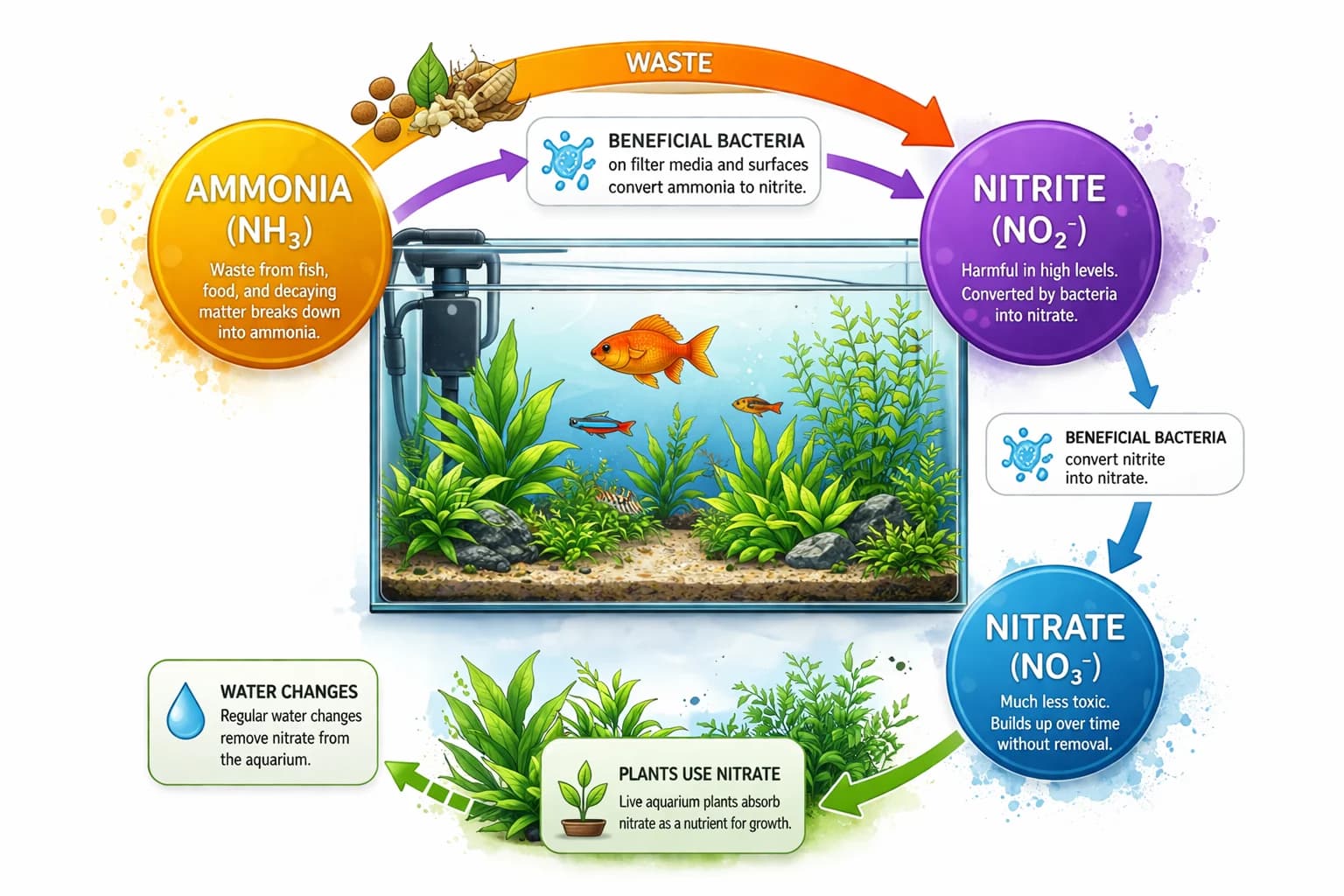
Both fish-in and fishless cycling are ways to grow the same beneficial bacteria that convert ammonia → nitrite → nitrate so the tank can safely support fish. The difference is whether fish are present while those bacteria establish. For background on the chemistry and tests, see the nitrogen cycle guide.
Quick check: During any cycle, expect ammonia and nitrite to move before they settle at 0. If you have livestock in the tank, test often and act on the numbers, do not rely on a calendar alone.
What the two names mean
Fishless cycling , You add an ammonia source (pure ammonia, fish food decay, or commercial ammonium chloride products used per instructions) and run the filter without fish until ammonia and nitrite read 0 and you can add a controlled ammonia dose without a sustained spike. Then you add fish gradually.
Fish-in cycling , Fish are in the tank while the filter matures. Waste from the fish supplies ammonia. You manage risk with minimal stocking, frequent testing, and water changes when parameters climb.
Neither method “skips” biology: you are still growing nitrifiers on media and surfaces. The tradeoff is who bears the exposure to early spikes.
At a glance
| Fishless | Fish-in | |
|---|---|---|
| Fish exposure to NH₃ / NO₂⁻ spikes | None until you stock | Possible without diligent testing and changes |
| Typical ammonia source | Dosed or decay-driven | Fish waste and food |
| Keeper workload early on | Dosing/testing, no livestock care | Testing + changes + feeding live fish |
| Common recommendation for first tanks | Often preferred | Works only with discipline and very light load |
Fishless cycling , strengths and limits
Why people choose it
- Fish are not in the water column while parameters may swing.
- You can raise ammonia in a controlled way to feed bacteria without overfeeding a tank that has no consumers yet.
- Easier to explain to newcomers as “get the filter ready, then add fish slowly.”
Tradeoffs
- You are maintaining a system with no fish for weeks, patience required.
- You must use a safe ammonia source and follow a sensible schedule; random overfeeding “to add ammonia” can foul water and invite the wrong kind of bloom.
- You still need a test kit and a clear “done” definition (ammonia processed within a reasonable time, follow a reputable step-by-step).
Fish-in cycling , strengths and limits
Why it exists
- Historically common; some keepers already have hardy starter fish in mind.
- Fish waste is a “natural” ammonia source, no separate dosing product.
Why it is unforgiving
- Ammonia and nitrite are toxic; young or sensitive species suffer quickly.
- Beginners often overfeed or add “a few more fish” too early, which overloads an immature biofilter.
- It only stays ethical if you test frequently, change water when needed, and keep bioload extremely low until the cycle completes, harder than it sounds on day one.
If you are new or your stock is delicate, fishless (sometimes combined with bottled bacteria per label) is usually the less punishing path.
Testing and water changes , both paths
- Use a liquid test kit where possible for ammonia and nitrite; read the same targets as in the nitrogen cycle guide: you want 0 ammonia, 0 nitrite, and a nitrate level you can manage with changes or plants.
- Fish-in: When ammonia or nitrite climb, partial water changes and stop feeding until levels fall, address the cause (too much food, too many fish, dead organic matter).
- Fishless: Follow a structured method; do not add a full stock the day nitrite first hits zero, confirm stability with a controlled check per your reference.
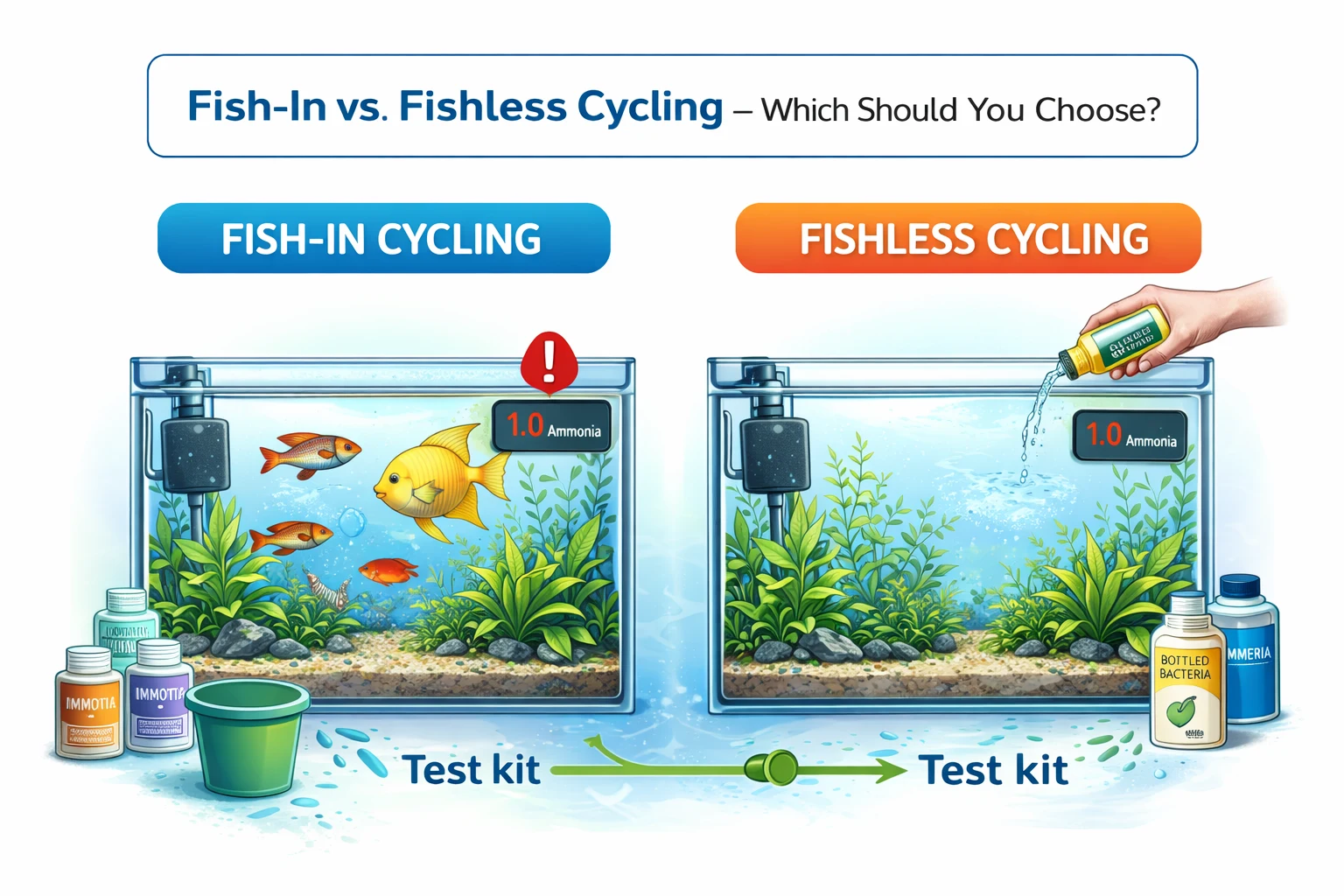
Same nitrogen cycle in both cases, this graphic highlights who supplies ammonia and who bears the risk while bacteria establish.
Which should you choose?
Lean fishless if: this is your first tank, you want minimal livestock stress, or you plan sensitive fish.
Fish-in only if: you accept daily or near-daily testing, minimal stocking at first, and immediate water changes when tests demand, and you are honest about the time cost.
There is no prize for rushing; a stable cycle matters more than the label on the method.
Tie it to stocking and gear
When the numbers look stable, add fish in small groups and keep testing. Use the tank builder so volume and filtration match the bioload you plan, not the bioload you hope for on impulse.
Educational overview only. For important choices, cross-check several reputable sources, and use your own test results and tap-water parameters, not generic advice alone.
Common questions
- Is fishless cycling better than fish-in cycling?
- Fishless cycling avoids exposing fish to ammonia and nitrite spikes while the biofilter matures, so it is often recommended for beginners and for sensitive species. Fish-in can work with very light stocking and strict testing, but it is harder on fish and on the keeper.
- Can bottled bacteria skip cycling entirely?
- Bottled nitrifying bacteria products may speed up or help establish colonies, but you should still verify with tests that ammonia and nitrite read zero under control before treating the tank as fully cycled. Follow the product label and confirm with your own kit.
- How long do fishless and fish-in cycling take?
- Both usually take on the order of several weeks, depending on temperature, pH, filter media, and whether you seed bacteria from an established tank. The timeline is driven by biology, not the label on the method.
- If I already started fish-in, can I switch to fishless?
- You cannot undo fish being in the tank, but you can reduce feeding, test often, and change water whenever ammonia or nitrite rise. Some keepers move fish to a mature tank temporarily while finishing a fishless cycle in the new tank, that is only realistic if you have safe, cycled housing for them.